
Kaspa: The True Successor of Bitcoin
1. Traditional PoW Blockchains Have Significant Performance Bottlenecks
Bitcoin is slow, producing one block every 10 minutes, and does not support smart contracts.
Ethereum ushered in the era of smart contracts, but eventually shifted to PoS due to PoW performance bottlenecks.
- Even after shifting to PoS, Ethereum remains slow (transactions take tens of seconds to minutes), and fees are expensive.
Solana sacrificed decentralization in pursuit of high throughput (adopting PoS + PoH mechanism). Moreover, system stability is insufficient, with multiple outages occurring.
- For details, see: Solana Outage After Trump Token Launch
Tip
These mainstream cryptocurrencies all have obvious technical flaws.
2. The PoS Mechanism Faces Many Controversies Regarding Decentralization
PoS is essentially a compromise to break through PoW performance limitations, and is actually a detour in the development process.
- Learn more: The Debate Between PoW and PoS
3. Kaspa Breaks Through PoW Performance Bottlenecks and Solves the Blockchain "Impossible Triangle"
Info
Kaspa's founder Yonatan Sompolinsky is a very senior researcher in the crypto industry. For details: Founder and Theoretical Architect - Yonatan Sompolinsky
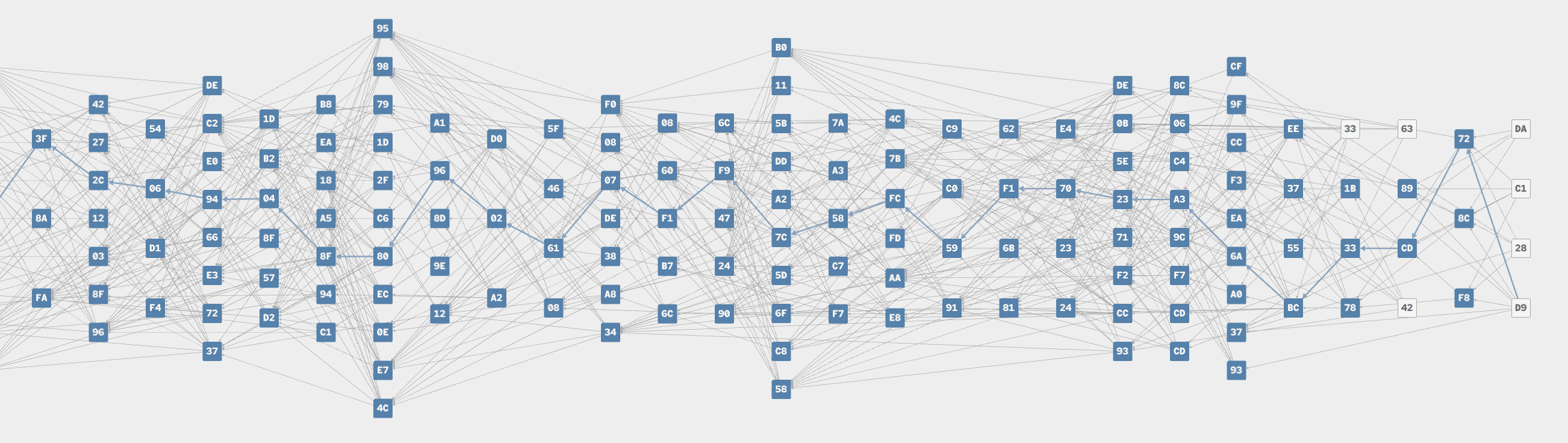
Kaspa adopts a DAG-based (Directed Acyclic Graph) PoW protocol, transforming the blockchain from one-dimensional to multi-dimensional, with a block production speed of 10 blocks per second.
- Next step: When the DagKnight protocol launches, block production speed will increase again (target: 100 BPS).
On October 5, 2025, the mainnet stress test completed 158 million transactions in 24 hours, with TPS ranging from hundreds to thousands. The system ran stably and smoothly, with mainnet transfers still arriving instantly, without delay.
- Details: 2025-10-05 Mainnet Stress Test
Solana Performance
Solana's real-world record: 24-hour transaction volume of 100 million (100M), with TPS around 1200. (2025)
Related report: https://coincentral.com/solana-sees-highest-daily-transactions-since-2021-while-remittix-breaks-funding-records-is-this-bullish-for-both/
Kaspa Solves the "Blockchain Trilemma":
Based on PoW, it inherits and strengthens Bitcoin's decentralization and security.
Based on DAG protocol, it achieves scalability that surpasses Solana.
In-depth analysis: Kaspa Solves the Blockchain Trilemma
4. Kaspa Now Supports Layer 2 Smart Contracts
In September 2025, the Kasplex smart contract platform officially launched.
View current smart contract projects: https://kas.fyi/l2-networks
About Layer 2
- Traditional Layer 2 smart contracts are not Kaspa's goal. Because traditional Layer 2 solutions often divert rather than enhance the network effects of Layer 1.
5. Kaspa Established the More Advanced vProg Protocol
Founder Yonatan proposed the revolutionary vProg protocol, which is currently the only "L2" architecture in the crypto field that can enhance rather than weaken L1 network effects.
Based on the vProg protocol, users can deploy smart contracts directly without relying on traditional Layer 2 platforms.
See details: 2025-09-11 vProg Protocol Whitepaper Release
Or refer to Yonatan's post: https://x.com/hashdag/status/1972416836110340509
6. Kaspa Is Committed to Solving the Miner Revenue Problem After PoW Block Rewards Disappear
Through the vProg protocol, L2 development will directly strengthen the L1 network, and L2 prosperity will increase miner revenue.
In the future, miners can rely on transaction fees to maintain long-term, secure network operation, achieving long-term sustainability of PoW. See details: Discussion on Future Miner Revenue Issues
7. Summary
Carrying Forward the Past
Kaspa combines Bitcoin's security consensus, Ethereum's smart contracts, and Solana's high throughput, achieving a breakthrough in blockchain scalability through a DAG-based PoW protocol.
The project adheres to complete decentralization and community-driven principles, upholding the fair launch principle, with no pre-mine, no reserved tokens, no VC capital dominance, making it the true successor to Bitcoin and the Nakamoto consensus.